
Reviewed · ELEPHANT SANCTUARY VISITS
Krabi: Elephant Care House Guided Tour with Hotel Transfers
At Krabi Elephant Care House, the main event is wonderfully simple: you walk beside elephants through the jungle to a stream, then help scrub their skin and bathe with them. The four resident elephants are female, roughly 45 years old, and have open jungle where they can move away from people when they choose.
I like the small-group setting, which gives you time to feed, wash, and photograph the elephants without the rushed feel of a large attraction. I also like the clear no-riding policy and the fact that the animals can disengage from contact. The main drawback is timing: although the outing lasts four hours, some of that is spent in the van, and the hands-on portion may be closer to two hours.
In This Review
- Key points to know before booking
- A quiet elephant experience outside Krabi Town
- Pickup from Krabi, Ao Nang, and the beaches
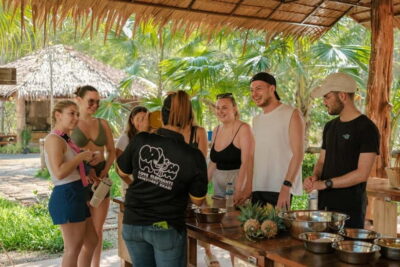
- The 15-minute safety briefing
- Feeding bananas, pineapples, and homemade food
- Walking beside the elephants to the stream
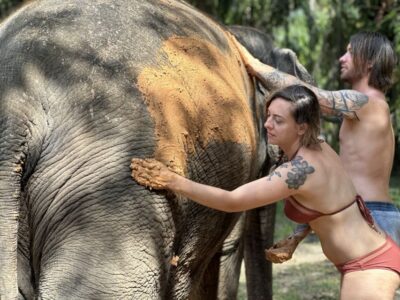
- Mud baths, scrubbing, and swimming with elephants
- Time with the elephants, and the real four-hour duration
- Why the animal-care approach matters
- The $57 price and what you receive
- What to pack for a wet jungle visit
- Who should book this experience?
- Should you book Krabi Elephant Care House?
- FAQ
- How long does the Krabi Elephant Care House tour last?
- Can I ride the elephants?
- Can the elephants leave during the activities?
- Where does hotel pickup operate?
- What languages do the guides speak?
- What should I bring?
Key points to know before booking
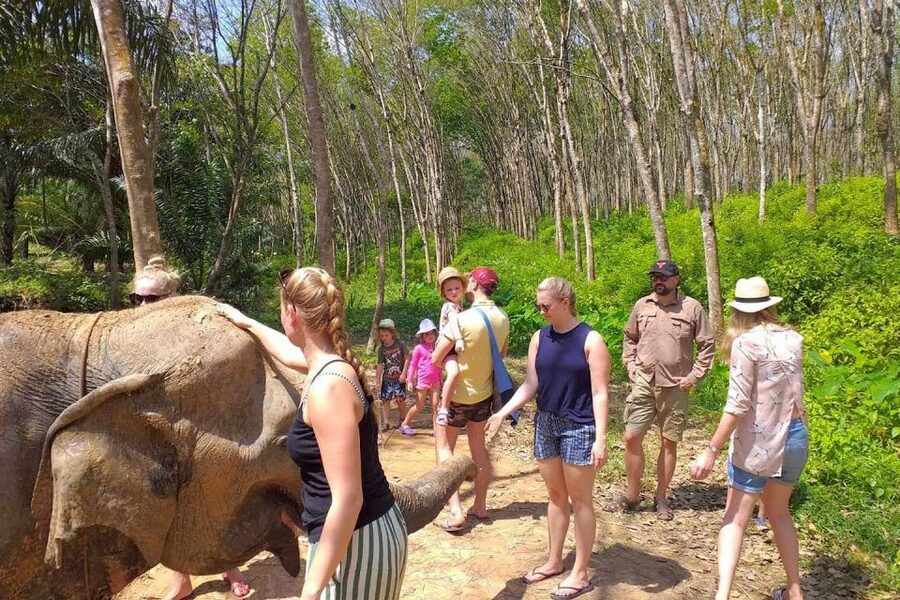
- A jungle stream is the main stage: Walk with the elephants from the care house to a natural stream for washing and bathing.
- No riding is allowed: The focus is feeding, observing, walking, and gentle contact.
- Small groups make a difference: Groups have ranged from just a few people to about 14.
- The elephants can walk away: They are not required to stay for photographs or touching.
- Bring waterproof gear: Expect water, mud, splashes, and wet clothes around bath time.
- Hotel transport is included: Pickup is available from Krabi Town, Ao Nang, Ao Nam Mao, Klong Muang, and Tubkaek Beach.
A quiet elephant experience outside Krabi Town
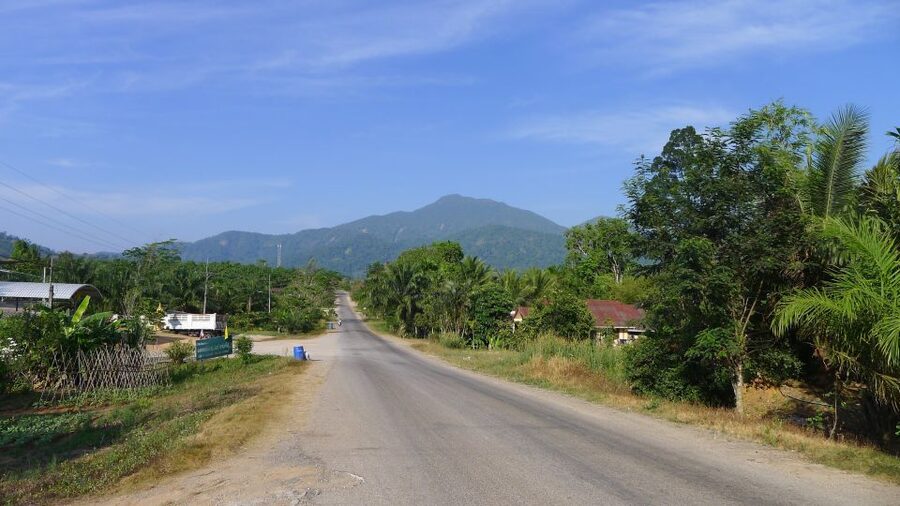
Krabi Elephant Care House sits near Khao Phanom Bencha National Park, about a 15-minute drive from Krabi Town in ideal conditions. In practice, hotel pickup and other stops can make the journey much longer. One trip from a hotel took about 40 minutes, while another visitor reported roughly an hour and a half from pickup to arrival.
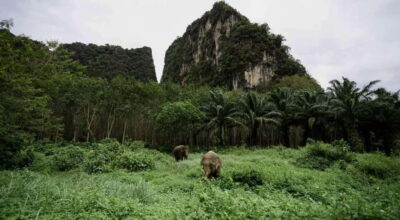
That travel time is worth keeping in mind. You are leaving the beach resorts and heading toward thick forest, mountain slopes, streams, waterfalls, and caves. The care house feels removed from the busy hotel strip, which is part of its appeal. You get a short nature outing as well as an animal encounter.
The area includes Krabi’s highest mountain point, at 1,397 meters above sea level. You will not be climbing that mountain on this half-day visit, but the forest setting gives the experience a more natural backdrop than a fenced photo platform.
The elephants belong to local families and are cared for as part of the household. The stated approach centers on human-elephant contact, but the important practical detail is that contact is not meant to be forced. The animals can move away, and you should respect that choice.
This is not a wildlife encounter in the strict sense. The elephants are accustomed to people and take part in supervised activities. Still, the chance to see them move freely through a wooded area, rather than carry riders or perform tricks, gives you a better basis for judging the operation.
More elephant sanctuary visits:
- Krabi: Elephant Bathing Session at Krabi Elephant Shelter
★ 4.9 · 2,021 reviews - Krabi: Elephant Sanctuary (near Ao Nang) Visit
★ 4.9 · 1,036 reviews - Krabi: Love Elephant Sanctuary Tour
★ 4.9 · 368 reviews
Pickup from Krabi, Ao Nang, and the beaches
Round-trip hotel transport is included from Krabi Town, Ao Nang, Ao Nam Mao, Klong Muang, and Tubkaek Beach. Nong Thale is also listed among the pickup and drop-off areas.
Your exact pickup time is confirmed by email after booking. Allow extra time in your morning or afternoon, since the four-hour duration includes the drive and may include collection from several hotels.
The vehicle is an air-conditioned van. Most transport went smoothly, and early or on-time pickup was common, but one problem is worth noting: a pickup vehicle was difficult to identify. If you are waiting outside a busy hotel, confirm the vehicle details and keep your phone available.
Railay Beach does not receive direct hotel pickup. You can use the boat ticket office at Ao Nam Mao Pier, which is about a 15-minute longtail boat ride from Railay East. If you are staying at Tonsai Beach, the meeting point is the reception at Phra Nang Inn in Ao Nang.
Those arrangements are manageable, but they add planning. If you are staying on Railay or Tonsai, do not treat the transfer as a doorstep service. Check the meeting point before the day of the visit.
The 15-minute safety briefing
The visit begins with a short safety briefing at the care house. This is not filler. Elephants are powerful animals even when they are calm, and you need to know where to stand, how to approach them, and when to give them space.
Your guide explains the planned activities and the behavior expected around the elephants. Guides speak English, Thai, and Chinese. Named guides such as Cookie and Cocky have been singled out for being friendly, patient, and helpful, though the clarity of spoken English may vary between guides.
The briefing is also your chance to understand the no-riding rule. You will not sit on the elephants, and the experience is built around feeding, washing, walking, and observing them.
Pay attention when the guide indicates that an elephant wants to move away. An animal that turns toward the jungle is not being difficult. It is making a choice, and allowing that choice is one of the strongest signs of a respectful encounter.
Feeding bananas, pineapples, and homemade food
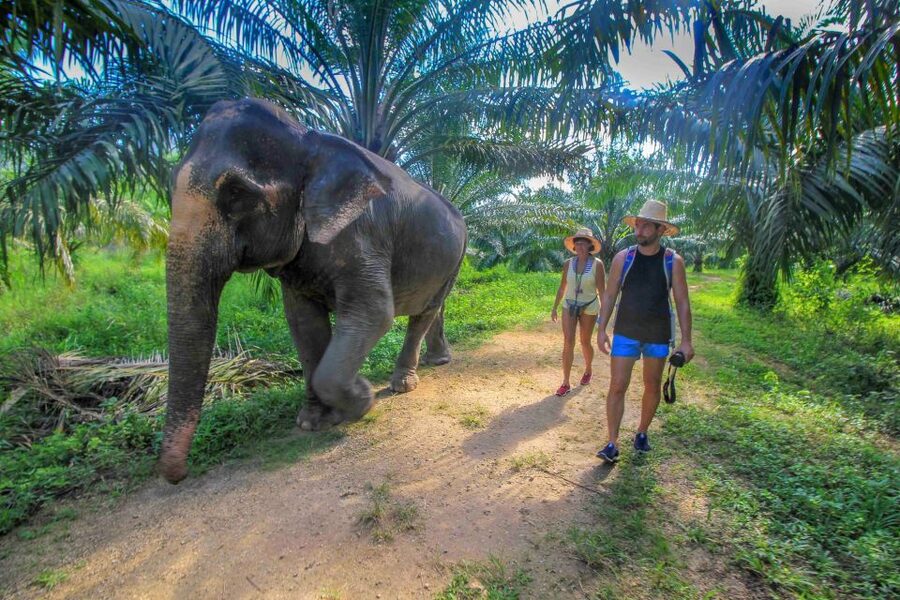
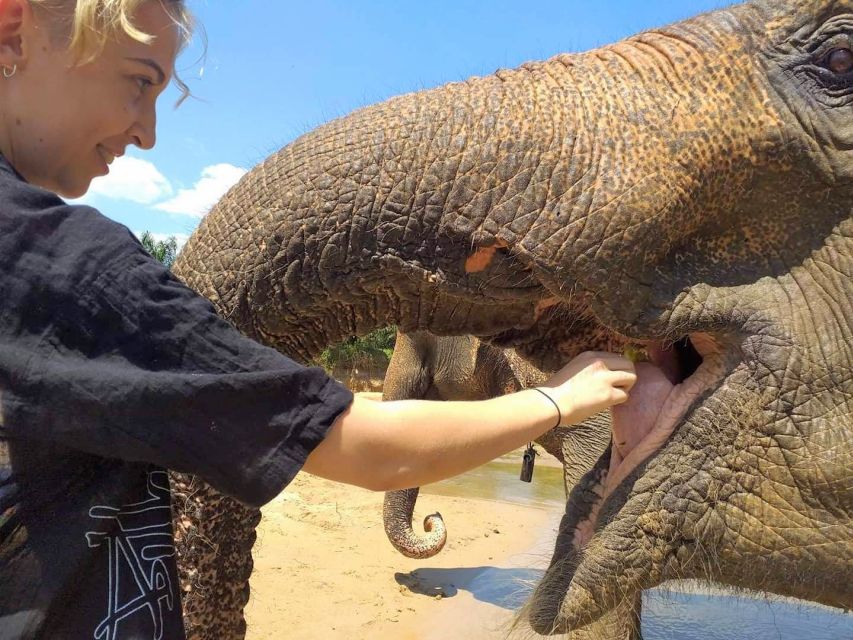
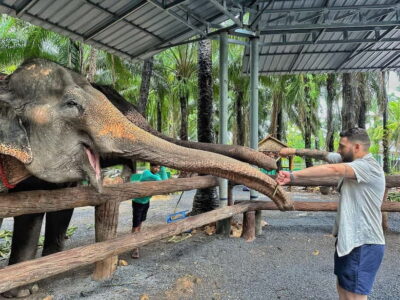
Food preparation comes early in the hands-on portion. You may help make food for the elephants, then offer pineapples and bananas by hand.
This is an easy way to begin. Feeding lets you get close without immediately entering the water or touching the elephant. You can watch the animals use their trunks, notice how they take food, and settle into the pace of the visit.
The food also creates a natural reason for the elephants to approach. That does not mean every elephant will remain beside you. If one wanders off, the guide may direct your attention to another activity rather than trying to bring it back.
Staff also provide drinking water and fruit for you. Bring your own water if you prefer to stay well supplied in the heat, but refreshments are part of the experience.
You should keep cameras and phones secure while feeding. Trunks are curious, and the rest of the program involves a great deal of water. A waterproof phone case is one of the smartest things you can pack.
A few more Krabi day trips to weigh up
- Krabi: Guided Kayaking Tour at Ao Thalane
★ 4.6 · 276 reviews - Guided Mountain Biking – Grand Tour – Trails of Ao Nang
★ 5.0 · 9 reviews - Krabi: Morning Food Tour with Local Guide
★ 5.0 · 9 reviews
Walking beside the elephants to the stream
The walk lasts about 45 minutes on the planned schedule. You follow the elephants along a stream through the jungle, watching them move at their own pace.
This is the part I find most valuable for understanding the care house. Instead of meeting the elephants only in a fixed bathing area, you see them walking through their surroundings. The forest, mountain air, and running water make the visit feel less like a staged animal show.
The route is not described as a demanding hike, but the ground can be wet, muddy, or uneven. Wear comfortable clothes and shoes that can handle water. Swimming shoes are especially useful, since sandals may shift in mud and ordinary trainers will stay wet.
Rain is possible. Heavy rain has not ended the activity, and raincoats have been provided, but the weather can change the character of the visit. Bring a change of clothes, and think of the day as an outdoor activity rather than a polished indoor attraction.
If you need walking support, tell the staff at the start. Staff have helped visitors who needed assistance, but the forest path and stream area still require care underfoot.
Mud baths, scrubbing, and swimming with elephants
At the stream, you watch the elephants take a muddy bath. You can help clean their skin, then enter the water and bathe with them.
This is the most playful part of the outing, but it is also the messiest. Mud, splashing, and wet clothing are unavoidable. Pack swimwear, sunscreen, insect repellent, sunglasses, and a sun hat. A towel is useful even though it is not listed among the official items to bring.
The elephants may come close, turn around, or move off during the bathing. Your guide controls the activity according to the animals’ mood. That can mean a less tidy photograph, but it is better than keeping an elephant in place simply to create a picture.
You should not expect a private swim with one elephant unless your group happens to be very small. Groups have ranged from two or three people to around nine or ten, with one group of 14. Small groups offer a calmer rhythm and more personal contact, while a larger group may make it harder to take a clear photograph alone with an elephant.
There is also a funny reality to bathing with large animals: one elephant reportedly relieved itself in the pool during the activity. If you need a perfectly clean swimming area and dry clothes, choose a different excursion. If you accept a little animal-made comedy, it is part of the day.
Time with the elephants, and the real four-hour duration
The advertised duration is four hours, including pickup and drop-off. The planned activities include a 15-minute briefing, a 45-minute walk, about 15 minutes of camp activities, and roughly an hour for sightseeing and refreshments.
The total time at the care house may be shorter than you expect. Some people spent around two hours on site, with about 90 minutes of direct elephant contact. Others felt they had plenty of time and did not feel rushed, especially in smaller groups.
Why the difference? Pickup routes, group size, weather, and the pace of the elephants all matter. If you book this expecting four full hours beside the animals, you may be disappointed. If you view it as a half-day outing with transport, forest time, and a focused animal encounter, the timing makes more sense.
A small group can make the same duration feel much better. You spend less time waiting for other people to take photos or complete an activity. Ask your guide for a clear outline at the start so you know how much time is planned for feeding, walking, and bathing.
Why the animal-care approach matters
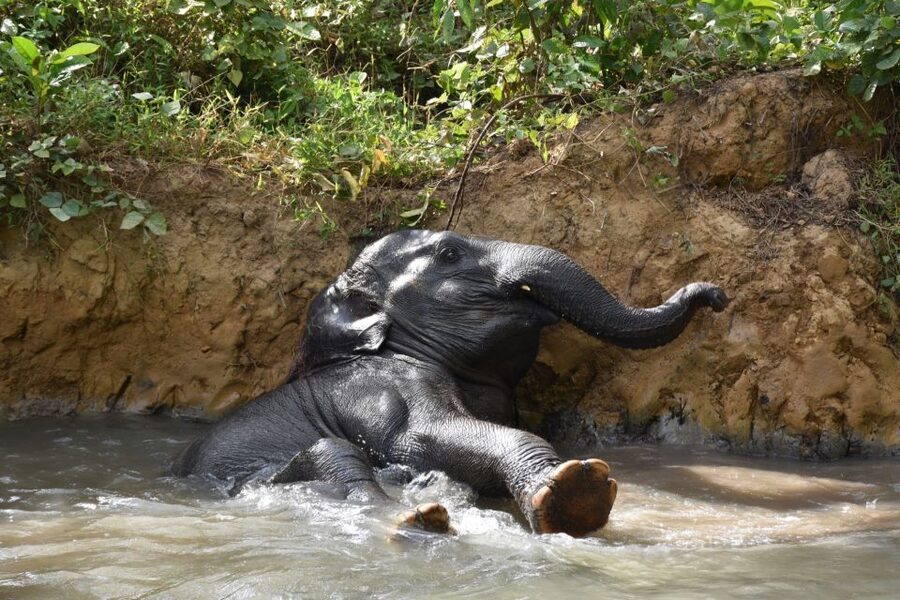
The strongest feature here is not simply that you can touch an elephant. It is the combination of no riding, open jungle space, and permission for the elephants to walk away.
Some of the elephants previously worked as riding elephants. Seeing them now in a setting where they can rest after meeting people is an important part of the experience. After the activities, the elephants are taken to another area where they can relax.
You should still make your own judgment about any elephant attraction. A short visit cannot tell you everything about feeding, veterinary care, working hours, or the animals’ full daily routine. Ask questions, watch how staff respond when an elephant disengages, and notice if the guides put the animals’ behavior ahead of a perfect photo.
Here, the practical rules point in a better direction. There is no riding, no demand that the elephants perform, and no requirement that they remain in contact. The guides have also been careful to begin activities only when the elephants appear willing.
That makes the visit more meaningful than a quick elephant ride. You still receive close contact, but the contact is framed around care and natural behavior rather than control.
The $57 price and what you receive
At $57 per person, the price is reasonable if you value a small-scale encounter and convenient transport. It covers hotel pickup and return, a guide, drinking water, fruit, and basic accident insurance.
You are also paying for the setting and the staff time involved in managing the elephants safely. A cheaper attraction may offer a shorter photo stop, while a larger operation may have a lower advertised price but less personal attention.
The value is strongest for families, couples, and first-time visitors who want a gentle introduction to elephants without riding. You get food preparation, feeding, walking, skin cleaning, and bathing in one half-day program.
The value is weaker if you mainly want a long jungle hike or several hours of quiet wildlife watching. This is an interactive activity, and the elephants are accustomed to people. It is also not ideal if you dislike mud, wet clothes, or group photography.
Free cancellation up to 24 hours before the activity and reserve-now-pay-later booking make it easier to fit into a changeable Krabi schedule. Those terms are useful, but the quality of the experience still depends on group size and the amount of time lost to transfers.
What to pack for a wet jungle visit
Pack light, but pack for water.
- Swimwear and a full change of clothes
- Insect repellent and sunscreen
- Comfortable clothing and sturdy water-friendly shoes
- A waterproof phone pouch or camera protection
- Sunglasses and a hat
- A towel if you want one after bathing
Do not bring expensive items you cannot protect. Water, mud, and elephant splashes reach farther than you might expect.
Rain does not necessarily cancel the experience. Staff have supplied raincoats during heavy showers, but wet weather can make the path slippery and the photographs less predictable.
Who should book this experience?
I would choose this for someone who wants close contact with elephants but rejects riding. It suits families, couples, and small groups that enjoy active, messy outdoor activities.
It is also a good match if you are staying in Krabi Town or Ao Nang and want to leave the resort area for a few hours. The forest setting gives you a change from beaches, restaurants, and boat trips.
You may want to skip it if you need guaranteed dry conditions, dislike shared activities, or want a strictly observation-only sanctuary. The bathing portion is central, not optional decoration.
Children should be comfortable around large animals and able to follow the guide’s instructions. The provided information does not specify an age minimum, so confirm suitability when booking if you are traveling with very young children.
Should you book Krabi Elephant Care House?
I would book it if your priority is hands-on contact without riding, especially if you can visit in a quieter period and join a small group. Feeding, walking through the jungle, and washing elephants at a stream creates a memorable half-day with a clear focus on animal choice.
Go in with realistic expectations. The four-hour figure includes transport, the hands-on time may be closer to two hours, and the group may affect your photographs. Wear clothes you can soak and stain, protect your phone, and let the elephants set the pace.
For a $57 outing with hotel transfers, multilingual guiding, refreshments, and a small care house in the forest, the package offers solid value. It is not a guarantee of perfect sanctuary standards, but its no-riding rule and allowance for the elephants to disengage are meaningful reasons to consider it.
FAQ
How long does the Krabi Elephant Care House tour last?
The full experience lasts four hours, including hotel pickup and drop-off. The time at the care house may be closer to two hours, with around 90 minutes of direct contact in some cases.
Can I ride the elephants?
No. Riding the elephants is not allowed. The activities focus on feeding, walking, cleaning, and bathing.
Can the elephants leave during the activities?
Yes. The elephants can move away and disengage from contact whenever they choose. You should follow the guide’s instructions and give them space when they do so.
Where does hotel pickup operate?
Pickup is available from Krabi Town, Ao Nang, Ao Nam Mao, Klong Muang, Tubkaek Beach, and Nong Thale. Railay and Tonsai Beach visitors use specified meeting points rather than direct hotel pickup.
What languages do the guides speak?
Guides are available in English, Thai, and Chinese. The guide team includes people referred to as Cookie and Cocky in the experience information.
What should I bring?
Bring swimwear, a change of clothes, comfortable clothing, sunscreen, insect repellent, sunglasses, a sun hat, and a camera. A waterproof phone case, swimming shoes, and a towel are also practical choices.
Just added around Krabi
- Sunset Horse Riding And BBQ Dinner Tour At Ao Nam Mao Beach Krabi★ 4.5 · 3 reviews
- Cheow Lan Lake Adventure from Krabi with Cave and Floating Lunch★ 4.5 · 3 reviews
- Krabi Cultural Experience★ 5.0 · 3 reviews
- Krabi: Sunset Kayaking Ao Thalane with Dinner BBQ★ 4.3 · 3 reviews
- Krabi: The Hilltop Aonang Food & Beverage Packages★ 3.7 · 3 reviews
- Blue Dragon Cabaret Ticket Dazzling Night from Krabi★ 4.5 · 3 reviews
- Krabi: Stand Up Paddle Board Rental Ao Nang Beach★ 5.0 · 3 reviews
- Krabi: Let’s Relax Wake Up Hotel Krabi★ 5.0 · 3 reviews
Elephant Sanctuary Visits, compared.
Elephant Bathing Session at Krabi Elephant Shelter
Read the review →
Elephant Feeding Program with Traditional Thai Dress
Read the review →
Ethical Elephant Sanctuary & Tiger Cave Temple Tour
Read the review →Browse the lists this tour appears in